Money20/20 Middle East Day Two Sees Landmark Saudi Qatar Payments Agreement as Major Fintech Investment
Saudi Central Bank (SAMA) and Qatar Central Bank announce agreement enabling mada and HIMYAN card use across both

Press Release Disclaimer: This is a press release distributed through the XPR Media network. It has not been independently verified by our newsroom.
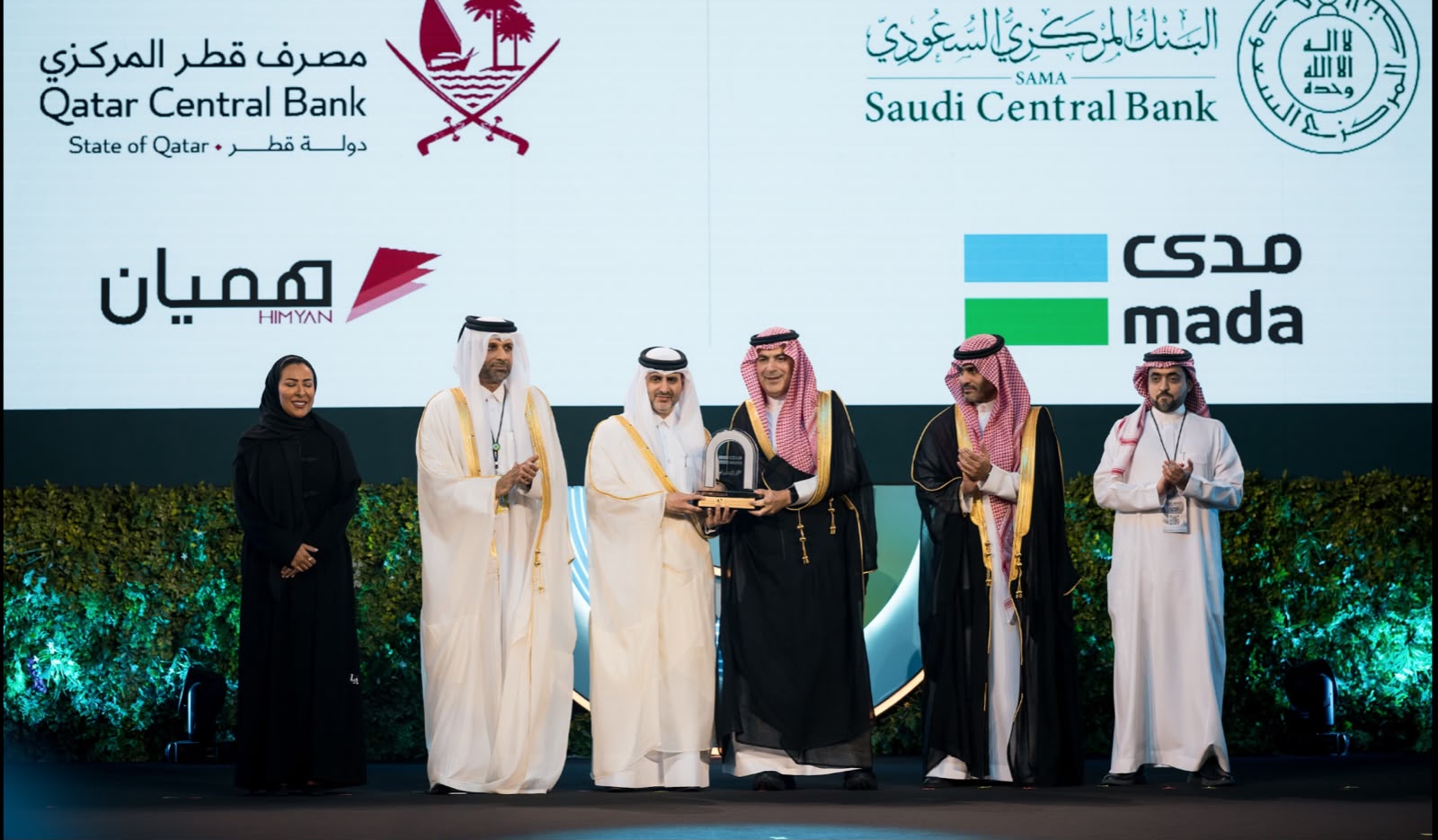

Saudi Central Bank (SAMA) and Qatar Central Bank announce agreement enabling mada and HIMYAN card use across both countries
RIYADH, SAUDI ARABIA, September 16, 2026 /EINPresswire.com/ — • Saudi Central Bank (SAMA) and Qatar Central Bank announce agreement enabling mada and HIMYAN card use across both countries
• H.E. Ayman Al Sayari, Governor of SAMA, highlights the Kingdom’s “exceptional” fintech growth, with sector investment exceeding SAR 30 billion by the end of H1
• barq announces USD 329.5 million Series A funding round at a USD 1.85 billion valuation, while Network International launches merchant acquiring services in Saudi Arabia
The second day of Money20/20 Middle East in Riyadh brought a series of major agreements, investment announcements and industry developments, led by a landmark agreement between the Saudi Central Bank (SAMA) and Qatar Central Bank enabling the cross-border use of national payment cards mada and HIMYAN.
H.E. Ayman M. Al Sayari, Governor, Saudi Central Bank (SAMA), delivered the opening keynote of day two, addressing the future of financial ecosystems and the importance of scaling with stability. During his remarks, H.E. Al Sayari highlighted the significant growth of Saudi Arabia’s fintech sector, which now includes 371 companies operating across the Kingdom. He also pointed to the continued expansion of digital financial services, with electronic payments accounting for more than 85% of retail payment transactions and more than 307 entities currently operating under the Kingdom’s open banking framework.
He also highlighted continued investor confidence in the Saudi market, with investment in the sector exceeding SAR 30 billion by the end of H1 2026, further strengthening the Kingdom’s position as an attractive regional investment destination.
That momentum was reflected in a series of announcements made on day two, led by the cross-border agreement between the Saudi Central Bank and Qatar Central Bank. The agreement will enable mada and HIMYAN cardholders to use their respective national payment cards seamlessly and securely across Saudi Arabia and Qatar.
Meanwhile, barq, the digital payments company, announced the close of a Series A funding round worth USD 329.5 million, at a valuation of USD 1.85 billion, cementing its position among the fastest-growing fintech companies in Saudi Arabia and wider region. Network International also announced the launch of its merchant acquiring services in Saudi Arabia, including point-of-sale (POS) and e-commerce payment solutions for merchants operating across physical and digital channels.
Beyond the announcements, discussions across the programme examined the conditions needed to attract global capital, the balance between technology and trust, the growing influence of AI on financial decision-making, and the role of regulation in building resilient financial systems.
Mohamed Alaadin, General Partner at Development Partners International, said: “Saudi Arabia has shifted from being an interesting market to being an investable market. For investors, that is a significant distinction: we can now underwrite opportunities based on clearer regulation, deeper pools of capital, follow-on funding and an increasingly credible path to liquidity and exits.”
Karim Samakie, General Manager – Fintech Sector at the Ministry of Investment, Saudi Arabia, added: “There is a vast range of opportunities for international investors in Saudi Arabia. In fintech and technology in particular, many companies have reached a level of maturity where they are regulated, established and serving meaningful market segments, creating opportunities not only for investment but also for acquisitions and international companies looking for a route into the Kingdom.”
The issue of the trust balance between technology and human touch was explored in “The Trust Layer: Building Financial Systems People Choose to Use.” Fahad Al Guthami, CEO of American Express Saudi Arabia, said: “The more the world becomes digital, the more the world will require trust. You can build the best accessibility, but if the trust and security are not there, it will not go far, it can actually create damage rather than opportunity.
The role of AI in financial decision-making was also examined during the session “Who Should Allocate Capital.”. Fariha Ansari Javed, Partner, GCC & Global Capital Formation at Stride Ventures, said: “There is a big difference between capability and accountability. AI can help us analyse data, identify what we may be missing, but it never takes away human judgement. Ultimately, accountability remains with the allocator, and AI should support rather than replace that judgement.”
Hussain Almarhoon, Founding and Managing Partner at HALA Capital, agreed, adding: “AI can automate processes, bring fragmented information together and provide stronger decision support, but it can also create a false sense of confidence when incomplete data is combined with sophisticated analysis. That is why we use AI as an intellectual challenger rather than a decision-maker.”
In another thought-provoking session titled “Governments as Financial Systems Builders,” which explored how governments are building the institutions and infrastructure that enable capital to thrive, Senator Osita Izunaso, Chairman, Senate Committee on Capital Market, Federal Republic of Nigeria, said: “Money cannot move in an atmosphere of uncertainty, and money cannot move when there is no confidence. Legislation is paramount because once the law is made, the regulator has the framework to regulate.”
Akshata Namjoshi, Equity Partner at KARM Legal, said: “What determines whether a regulator is ready is how much public consultation it has undertaken. Regulators need industry discussions, market assessment and feedback-based engagement to understand what companies, lawyers and service providers need and to build a framework that can work over the long term.”
Together, the announcements and discussions across day two reflected a financial ecosystem moving increasingly from ambition into implementation, with new infrastructure, capital and services coming into the market alongside continued dialogue between regulators, financial institutions, fintech companies, investors and technology leaders.
Steve Durning, Associate Vice President at Tahaluf, said: “A lot of what the industry has been talking about for the past few years is now becoming real. AI is moving into everyday financial services, payments are evolving incredibly quickly, and we are seeing new products and business models come to market all the time. What has been interesting at Money20/20 Middle East is hearing those conversations move beyond what might be possible and into what companies are actually doing, what customers need and what it takes to scale. Having regulators, banks, fintechs, investors and technology companies here together makes those conversations much more useful.”
Money20/20 Middle East continues at the Riyadh Exhibition & Convention Centre in Malham through 16 September, with further announcements, investment activity and industry discussions expected across the closing day.
Registration and further information are available at www.money2020middleeast.com.
– Ends –
About Money20/20 Middle East
Money20/20 Middle East is the region’s home for the global money ecosystem a platform that unites regulators, banks, fintechs, investors, and technology innovators to accelerate the future of financial services. Through world-class content, high-impact networking, and landmark announcements, the event positions Saudi Arabia at the heart of global fintech innovation.
About Money20/20
Money20/20 is the world’s leading premium content, sales, and networking platform for the global money ecosystem, with flagship shows in Amsterdam (Europe), Las Vegas (USA), Bangkok (Asia), and Riyadh (Middle East). Part of Informa, Money20/20 is where the industry’s smartest visionaries and innovators come together to create the future of money. In 2025, Money20/20 Middle East was recognised as Best International Show Middle East at the AEO Excellence Awards, reflecting its growing influence and impact on the global fintech landscape.
About Tahaluf
Tahaluf is a leading events company in Saudi Arabia, delivering world-class platforms that ignite innovation across key global industries. Through flagship events such as LEAP, Black Hat MEA, and Money20/20 Middle East, Tahaluf connects global experts, visionaries, and organisations to shape the future through collaboration, creativity, and technology.
Almas Yousef
Action Global Communications
email us here
Legal Disclaimer:
EIN Presswire provides this news content “as is” without warranty of any kind. We do not accept any responsibility or liability
for the accuracy, content, images, videos, licenses, completeness, legality, or reliability of the information contained in this
article. If you have any complaints or copyright issues related to this article, kindly contact the author above.

Media gallery