
Antistatic PU Insoles: What CE Certification Means for Safety Footwear Buyers
DONGGUAN, GUANGDONG, CHINA, August 24, 2026 /EINPresswire.com/ -- In modern industrial facilities, electrostatic

Press Release Disclaimer: This is a press release distributed through the XPR Media network. It has not been independently verified by our newsroom.
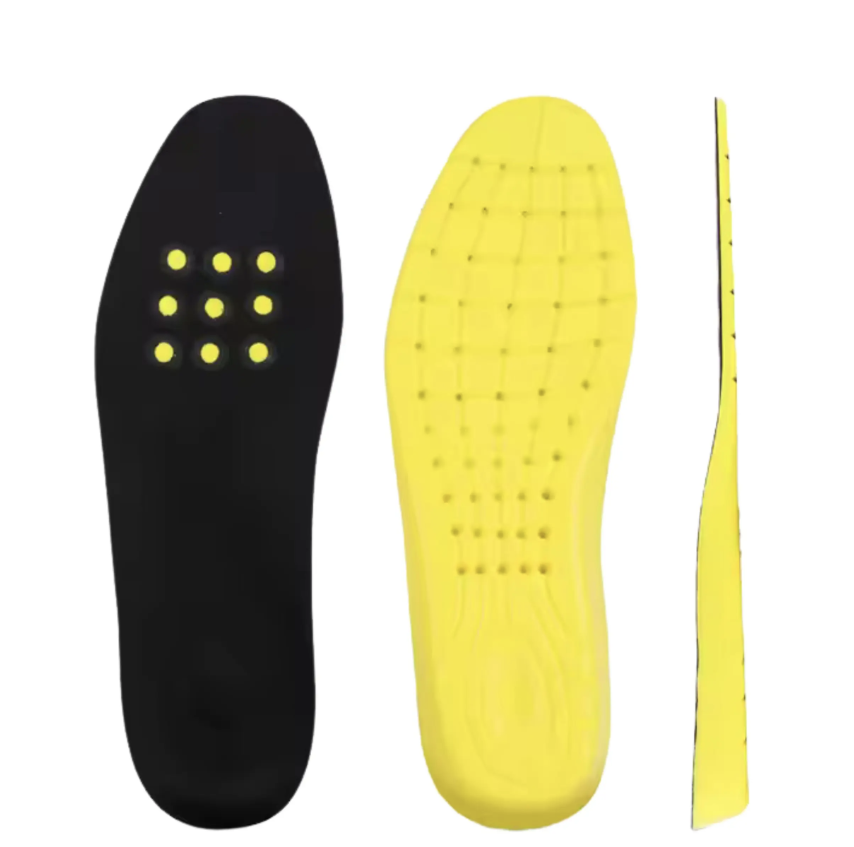

DONGGUAN, GUANGDONG, CHINA, August 24, 2026 /EINPresswire.com/ — In modern industrial facilities, electrostatic discharge represents a major threat to operational safety and manufacturing yield. High-tech semiconductor plants, automated electronics assembly lines, chemical processing units, and cleanrooms operate under strict static control protocols. A single unmanaged micro-spark can destroy delicate microchips, corrupt precision sensors, or ignite volatile organic vapors in explosive atmospheres. Friction between clothing, footwear, and flooring surfaces continuously generates triboelectric charges on workers during daily activities. Consequently, industrial health and safety directors no longer treat safety boots as simple physical barriers against heavy impacts. Modern safety standards require full electrostatic dissipation across the entire footwear system. Integrating high-performance Antistatic PU Insoles into occupational safety boots establishes a reliable conductive bridge from the worker to the grounded floor. By continuously bleeding static charges away from the body, these specialized internal components protect personnel and sensitive electronic equipment. Therefore, procurement executives must carefully analyze the regulatory standards governing antistatic footbed performance.
Decoding CE Certification: Electrical Resistance Standards & Testing Protocols
Navigating international safety standards requires a thorough understanding of official European regulatory frameworks. The European Union governs personal protective footwear under the EN ISO 20345 standard, which outlines fundamental safety criteria for work boots. Additionally, regulatory authorities rely on EN ISO 20344 for standardized laboratory testing methods and IEC 61340-5-1 for specialized electrostatic discharge control. These comprehensive standards establish precise electrical resistance ranges to categorize safety components based on their dissipation capabilities.
Under European CE certification protocols, electrical resistance across footwear components falls into three distinct categories. Conductive insoles maintain electrical resistance below 10^5 ohms (100,000 ohms), facilitating instantaneous energy discharge in extreme high-voltage risk zones. However, antistatic insoles operate within a strictly calibrated safety window between 10^5 ohms and 10^9 ohms (100,000 ohms to 1,000,000,000 ohms). This target range provides the ideal benchmark for industrial safety footwear. It bleeds static accumulation away safely while protecting workers from accidental contact with low-voltage electrical circuits up to 250 volts. Conversely, material structures exhibiting electrical resistance above 10^9 ohms act as insulating barriers that trap electrostatic charges on the wearer. Furthermore, accredited CE testing laboratories evaluate sample insoles under controlled relative humidity and temperature variations to verify real-world operational compliance.
The Engineering Challenge: Sustaining ESD Performance in Durable Polyurethane Foam
Achieving certified electrostatic dissipation during initial laboratory testing is only the first step in component engineering. Maintaining consistent electrical resistance throughout months of heavy industrial wear presents a complex polymer science challenge. Low-cost safety footwear manufacturers frequently rely on topical antistatic sprays or surface-coated fabrics. Although these superficial treatments pass initial laboratory audits, daily mechanical friction quickly rubs off the conductive surface layer. Within weeks of factory use, surface-treated insoles lose their static dissipation capabilities, leaving workers unprotected and exposing facilities to audit failures.
Furthermore, dynamic physical forces and internal boot moisture exacerbate material degradation over time. Foot perspiration contains dissolved mineral salts that can corrode temporary antistatic chemicals. Simultaneously, heavy daily foot pressure collapses low-grade open-cell foams, breaking the internal pathways needed for electrical conduction. For safety footwear buyers, sourcing insoles that maintain stable resistance across hundreds of thousands of dynamic flex cycles remains essential. Achieving lasting compliance requires transitioning away from superficial sprays toward advanced matrix-integrated polymer engineering.
How Foamwell Delivers Certified ESD Protection & Heavy-Duty Comfort
Solving these technical durability challenges requires sophisticated chemical engineering and specialized manufacturing capabilities. Foamwell stands as an industry benchmark in technical foam manufacturing, supplying certified static-dissipative solutions for global safety footwear brands.
Rather than applying temporary surface sprays, the company incorporates conductive anti-static compounds directly into the liquid polyurethane polymer matrix during primary foaming. This matrix-integrated process distributes conductive pathways evenly throughout the entire foam volume. Consequently, an ESD work insole manufactured through this method retains stable electrical dissipation even after severe mechanical wear, surface abrasion, and repeated cleaning. The material consistently satisfies EN ISO 20345 resistance requirements while maintaining compliance with strict zero-volatile organic compound emission standards.
In addition to certified electrical performance, industrial workers require ergonomic physical support during long shifts. Extended 12-hour factory shifts place immense mechanical stress on feet, ankles, and lower back joints. The manufacturer addresses physical fatigue by combining its static-dissipative PU matrix with high-density open-cell structures, deep U-shaped heel cups, and anatomical arch support. This dual-action design absorbs dynamic heel impacts, stabilizes foot positioning, and promotes interior air circulation. Through complete OEM and ODM customization services, the supplier enables global safety brands to fine-tune foam density, shore hardness, and electrical resistance values for specific industrial applications.
The Safety Buyer’s Compliance Audit: 4 Verification Steps Before Bulk Procurement
Securing fully compliant safety footwear components requires a structured auditing process before placing large-scale purchase orders. Procurement managers and safety compliance directors should implement a four-step verification protocol during vendor evaluations.
Step 1 focuses on official documentation verification. Sourcing teams must audit original CE compliance certificates and independent lab test reports from accredited organizations such as SATRA. Buyers must verify that tested production samples match bulk production specifications.
Step 2 involves environmental humidity testing. Because relative humidity alters electrical resistance measurements, buyers should request test data recorded under low-humidity conditions, such as 12 percent relative humidity. Maintaining static dissipation in dry cleanroom environments proves authentic material capability.
Step 3 evaluates mechanical shock absorption and dynamic compression set resistance. Sourcing teams should inspect laboratory flex fatigue data to ensure the polyurethane foam retains its thickness and protective cushioning over extended operational lifespans.
Step 4 conducts a thorough manufacturing facility audit. Inspecting a supplier’s raw material quality control systems, batch-to-batch electrical testing protocols, and rapid 3D prototyping capabilities ensures a reliable long-term supply chain partnership.
Strategic Sourcing: Partnering for Reliable Industrial Safety Components
In 2026, antistatic compliance remains a fundamental requirement for industrial workplace safety. Sourcing CE-certified antistatic polyurethane insoles protects worker health, prevents costly electronic component damage, and guarantees regulatory compliance across global markets. Footwear brands and industrial safety buyers seeking certified static-dissipative PU components, heavy-duty ergonomic designs, and custom OEM/ODM solutions can explore technical capabilities at https://www.foam-well.com/.
Foamwell Limited
Foamwell Limited
+ +86 13549380132
email us here
Legal Disclaimer:
EIN Presswire provides this news content “as is” without warranty of any kind. We do not accept any responsibility or liability
for the accuracy, content, images, videos, licenses, completeness, legality, or reliability of the information contained in this
article. If you have any complaints or copyright issues related to this article, kindly contact the author above.

Media gallery

