California Pregnancy Handicap Placards: HandicapMD Introduces Eligibility and Medical Certification Guide
California pregnancy parking guidance explains assessed mobility limitations, REG 195, temporary timing, and the

Press Release Disclaimer: This is a press release distributed through the XPR Media network. It has not been independently verified by our newsroom.
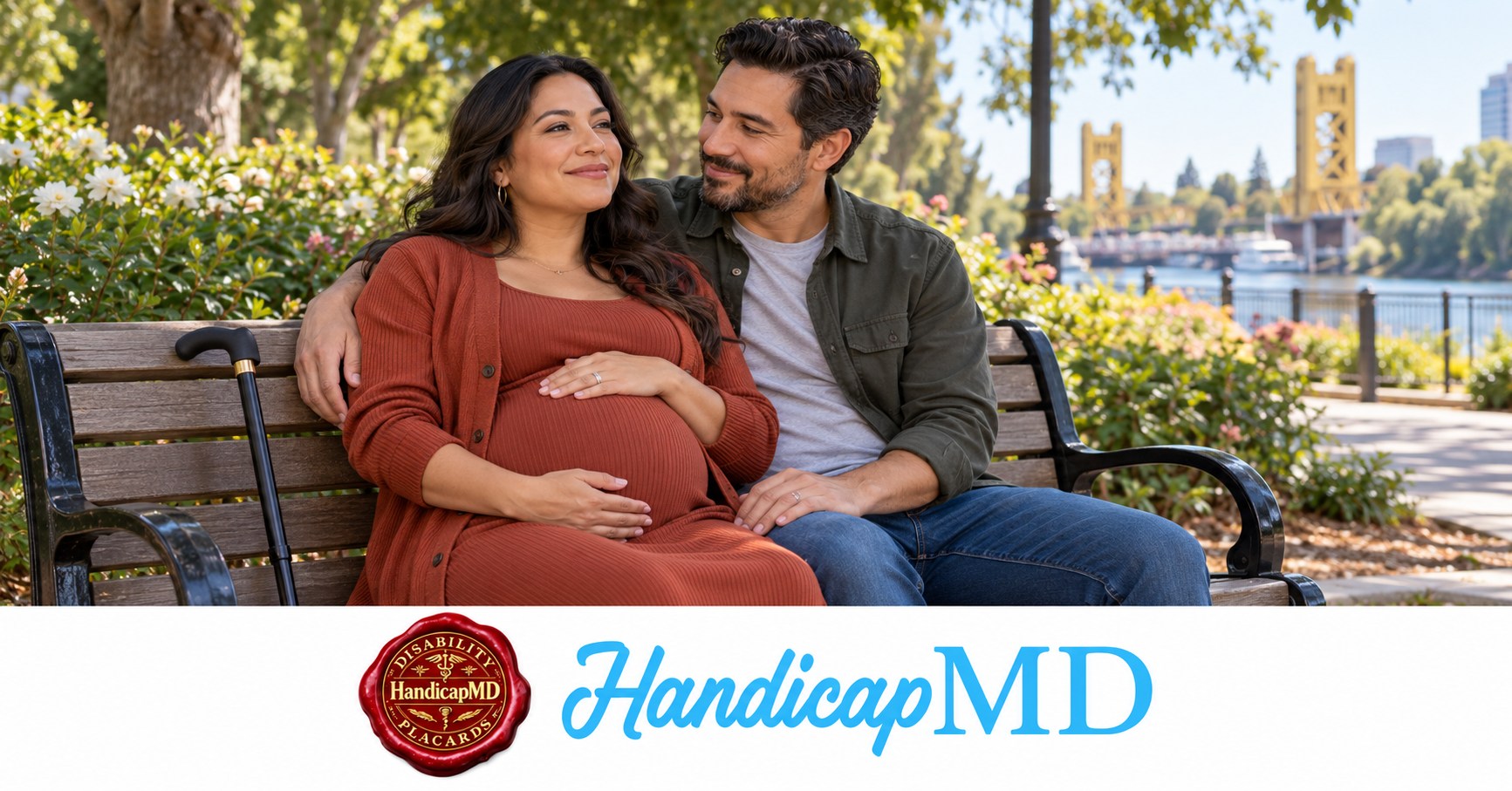

California pregnancy parking guidance explains assessed mobility limitations, REG 195, temporary timing, and the separate DMV decision.
SACRAMENTO, CA, UNITED STATES, October 29, 2026 /EINPresswire.com/ — HandicapMD is introducing a California pregnancy handicap placard resource that explains how pregnancy-related mobility concerns connect with the state’s ordinary disability parking application. The guide addresses a frequent source of confusion: expecting a baby does not by itself establish an automatic entitlement to a California disabled-person placard. A qualifying condition, an appropriate professional assessment, and the required application remain central to the decision.
The California disability permit REG 195 form guide brings eligibility questions together with REG 195 preparation, temporary credential timing, and the distinction between medical certification and DMV issuance. It is designed for people who want to understand the process before asking a clinician to complete paperwork. The announcement concerns educational guidance, not a new pregnancy benefit, a change in state law, or a promise that an evaluation will lead to certification.
Start with the health concern, not the parking document
Pregnancy can change how a person experiences an ordinary journey. The route from a parking area to a prenatal appointment, movement across a large workplace, or standing during a necessary errand may become difficult. Those experiences deserve a clinical conversation when they raise concerns. The parking application is one possible administrative question within that conversation; it should not displace care for the underlying problem.
A person preparing to discuss certification can describe what happens during familiar activities without trying to diagnose the cause. Explain when the limitation began, whether it has changed, what assistance is used, and how ordinary walking is affected. The maternity team or another appropriate clinician can assess the medical issue. Do not copy an eligibility statement from another applicant or treat a due date as a substitute for a supported finding.
California uses its regular disabled-person application
The California Department of Motor Vehicles identifies REG 195 as the Application for Disabled Person Placard or Plates. It explains qualifying mobility and visual categories and requires appropriate medical certification for applications where that step applies. For a pregnancy-related temporary request, the professional must assess the actual condition against the relevant criteria. The name of a symptom, an assumption about a trimester, or another person’s approval does not decide the case.
The guide encourages applicants to identify the requested product before gathering signatures. REG 195 serves several purposes, including placards and plates, so not every section describes the same transaction. A person seeking help during a temporary limitation should not select a permanent category to simplify paperwork. The final application needs to communicate the supported request coherently, using the current form and the DMV instructions for that request.
What temporary timing means in practice
DMV describes a California temporary placard as valid for up to 180 days or the date certified by the qualifying medical professional, whichever is shorter. It also limits consecutive temporary renewals. The applicable duration is not an automatic six-month award for every pregnant applicant. The professional’s assessment and the actual expiration matter, and the credential’s dates should remain separate from predictions about delivery or recovery.
Families can place several dates on a planning calendar without treating them as interchangeable: the next clinical review, a scheduled procedure, the current placard expiration, and a government submission date. If circumstances change, ask which decision needs attention. A continuing limitation may require a new assessment or another administrative step. A planned birth date should not be used to invent either the beginning or end of disability.
Choosing a professional whose scope fits the request
California lists several professionals who may complete medical certification, with scope-specific limits for some categories. Its materials identify physicians or surgeons, physician assistants, nurse practitioners, and certified nurse-midwives for applicable findings, alongside more limited roles for other listed professions. An applicant should ask whether the professional understands the condition and can complete the relevant certification, rather than assume the nearest available signature is sufficient.
For someone already receiving maternity care, the existing team may be the most useful place to begin the medical discussion. Explain the parking-related concern and ask whether the team can assess it, needs another evaluation, or handles these documents through a separate process. Some practices have form turnaround procedures. Understanding that workflow can help coordinate the request without pressuring a clinician to sign before the assessment is complete.
When considering an online evaluation, state where you will physically be during the encounter and ask about service availability. A remote visit must still provide an adequate clinical basis for any certification. Online access does not remove professional licensing or form requirements. HandicapMD can explain its evaluation pathway, while the clinician decides what the individual information supports and California DMV makes the credential decision.
Useful information for a pregnancy-related mobility conversation
Keep a brief account of ordinary experiences. A person might explain that walking from usual parking to an appointment now requires pauses, that a companion provides assistance, or that a prescribed aid has become necessary. Describe those facts accurately, including variation. These observations help organize the conversation but are not a self-administered qualifying test. Follow established care instructions and do not provoke symptoms to create evidence.
Records can help answer a specific clinical question when available. Ask the evaluating practice which information is relevant, such as a treating professional’s assessment or current activity restrictions. An entire prenatal chart is not automatically necessary for every administrative question. Use the practice’s private channel and clarify whether a requested document is for clinical review or government submission. Those destinations may need different information.
Support can be practical without becoming clinical decision making. A partner might help locate a form, test a video connection, or write down questions the applicant wants to ask. The applicant should remain involved and have room to describe their own experience. If communication assistance is needed, raise it before the encounter so the practice can explain available arrangements and how another person may participate.
Paperwork should describe the person seeking the credential
A household may share vehicles, appointments, and document storage, but the application still concerns one eligible person. Check the applicant’s name and requested category throughout the packet. A companion driving to a prenatal visit does not become the individual whose condition is being certified. Any help completing fields should preserve the applicant’s accurate information and the professional’s independent medical findings.
Review the completed document before filing, concentrating on identity, legibility, relevant dates, and the requested product. If something appears inconsistent in the medical portion, send the question back to the practice. Do not replace a diagnosis, extend a date, or reproduce a signature yourself. A brief correction handled by the responsible professional can prevent an avoidable discrepancy from continuing into the government review.
An online application remains a government application
California offers an online placard application pathway as well as other submission routes described by DMV. Read the current instructions for the selected transaction and use the required completed documents. A digital intake with a private clinical service is separate from filing with DMV. An appointment confirmation or a downloaded form does not establish that a government application has been received or approved.
Before sending a file, open it and inspect the actual pages. Ensure a scan has not cropped the applicant information, the professional section, or a signature. Keep a copy of the final submitted packet and the relevant confirmation. If correspondence requests clarification, identify the precise issue before arranging another appointment. The missing item may concern identity or transmission rather than an unresolved medical question.
Separate the state fee from the clinical service
DMV’s fee information distinguishes temporary and permanent placards. The guide explains that a government credential charge and a private medical evaluation charge are separate expenses. Before paying for any service, ask what it includes and whether an assessment is actually the next unresolved step. Someone with completed acceptable certification may instead need to submit the application or resolve a question with the issuing office.
Avoid assuming that a faster-looking offer can guarantee a credential by a particular appointment or travel date. The medical practice controls its own assessment and documentation process, while the agency controls its review and issuance. Ask each organization about its current procedures. Plan transportation using confirmed arrangements rather than an expected approval, and seek clarification when an advertised service seems to combine decisions made by different organizations.
After the appointment, plan the whole visit
Even an issued placard answers only part of a transportation problem. Before a clinic visit, a family can ask about the entrance route, seating while waiting, the distance inside the building, and assistance arrangements. A shorter journey from a vehicle does not describe every corridor or appointment location. Direct facility questions to the organization that operates the location and keep any confirmed arrangement with the appointment details.
Consider a hypothetical person traveling with a partner to a medical campus. The partner might arrange an appropriate drop-off and confirm how to reconnect afterward, while the applicant discusses mobility concerns with the clinician. The parking question, clinical assessment, and campus transport arrangements remain separate. This example offers a way to organize decisions; it is not a report of a patient’s outcome or a finding about a campus.
When work and appointment schedules overlap
A person may be arranging prenatal care around employment, family responsibilities, and limited transportation. Place the unresolved application task beside those commitments instead of adding another appointment automatically. Ask the practice whether the form can be discussed during an already scheduled visit, whether a separate assessment is needed, and how completed paperwork will be returned. The answer depends on the practice and the individual situation.
Keep workplace questions separate. A parking application does not decide an employer’s accommodation process, a leave request, or a clinician’s treatment restrictions. If more than one document is needed, name each recipient and ask what that recipient requires. Combining several requests in an unexplained message can leave the practice uncertain about which task is urgent and which form belongs to it.
For personal organization, one checklist can show the clinical question, the document awaiting completion, and the party responsible for the next action. Review it after each conversation. This is a planning suggestion rather than a California filing requirement. Its value is helping the applicant see what remains open without repeating completed steps or circulating unnecessary personal information among several helpers.
Pregnancy and postpartum recovery need individual attention
A change after delivery can create new questions about function, care, and administrative timing. Do not assume that an existing certification automatically covers every later circumstance or that the end of pregnancy settles a recovery-related limitation. Discuss current concerns with the treating team and ask about the correct paperwork when appropriate. A parking guide does not provide personal medical clearance, rehabilitation instructions, or advice about safe driving.
The California handicap parking placard overview provides a broader starting point for residents considering medical evaluation and the State application process. Pregnancy-related questions still require an individualized clinical assessment of the relevant limitation. Readers can connect that discussion with current California paperwork, credential choices, and the submission steps that remain after appropriate medical certification has been completed.
HandicapMD’s resource emphasizes the decisions that a reader can prepare: describing the concern honestly, selecting the correct application, understanding the clinician’s role, and keeping government submission distinct. It invites applicants to ask focused questions rather than assume that pregnancy guarantees a credential. The aim is clearer information for a supported clinical conversation and a properly understood administrative process.
About HandicapMD
HandicapMD provides online medical evaluations related to disability parking certification. When supported by the clinical assessment and applicable requirements, a licensed clinician completes the medical portion of the relevant application. The company’s educational resources explain state processes and help residents prepare questions. Government agencies retain responsibility for reviewing applications and issuing parking credentials.
https://www.handicapmd.com/
Crystal Dennon
HandicapMD
help@handicapmd.com
Visit us on social media:
Instagram
Facebook
YouTube
How to Get Your Handicap Parking Permit for Pregnancy – Pregnant Disability Permits Online
Legal Disclaimer:
EIN Presswire provides this news content “as is” without warranty of any kind. We do not accept any responsibility or liability
for the accuracy, content, images, videos, licenses, completeness, legality, or reliability of the information contained in this
article. If you have any complaints or copyright issues related to this article, kindly contact the author above.

Media gallery