
Food‑Grade Plastic Buckets for Food Contact Packaging: Compliance and Buying Guide
NANJING, TIANJIN, CHINA, July 29, 2026 /EINPresswire.com/ -- Every food brand that changes packaging suppliers tends to

Press Release Disclaimer: This is a press release distributed through the XPR Media network. It has not been independently verified by our newsroom.
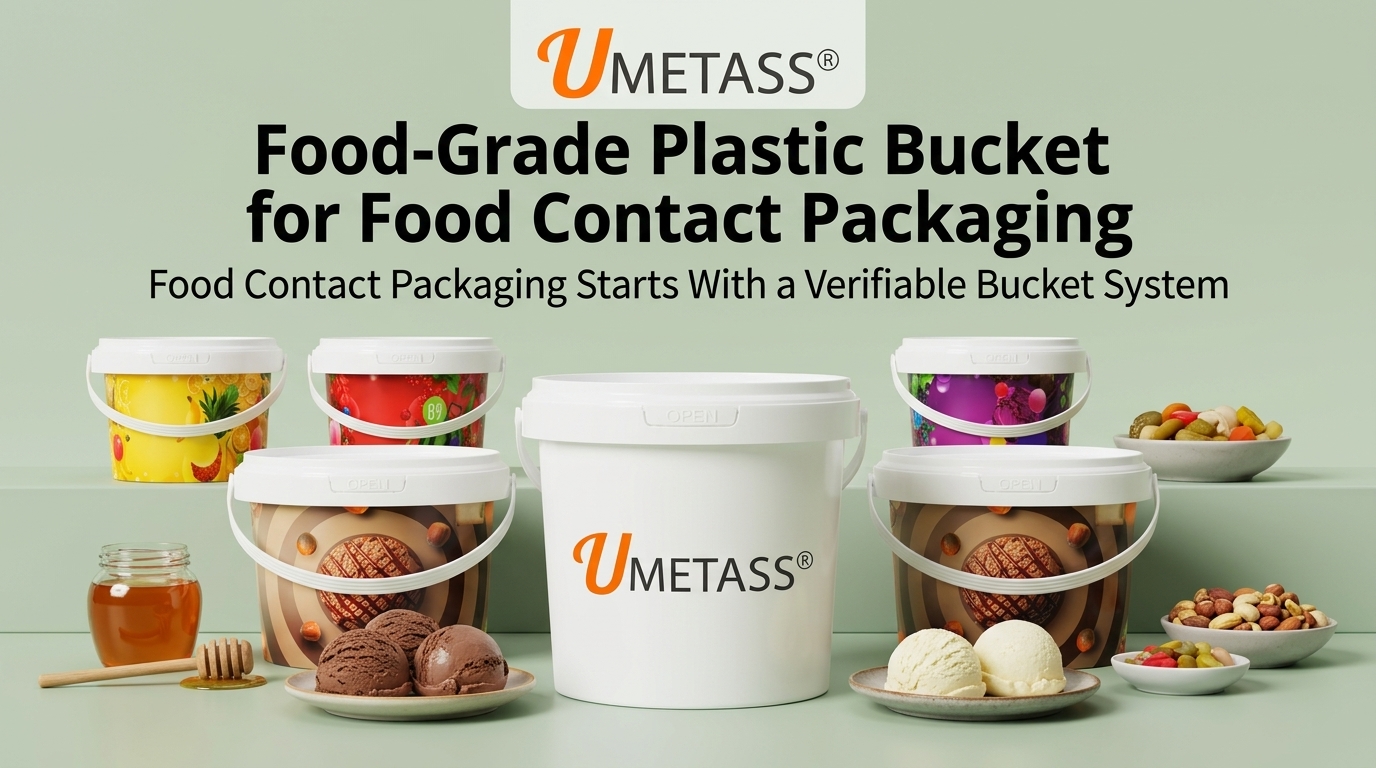

NANJING, TIANJIN, CHINA, July 29, 2026 /EINPresswire.com/ — Every food brand that changes packaging suppliers tends to learn the same lesson: a “food grade” label is not a specification. The more useful question for a procurement team is narrower, and it turns on the resin, the closure, the temperature limits, and the documents a supplier can actually hand over. A Food-Grade Plastic Bucket is, at bottom, a food-contact container built for solid, semi-solid, and liquid foods, and it only earns that name when its material and its working conditions line up. Hot filling, freezer storage, salted pickling, and thick, high-viscosity contents each place different demands on what looks like the same bucket.
Buyers are also moving away from comparing capacity alone and toward checking product safety, seal integrity, and batch paperwork together, as one package. Nanjing Shuishan Technology Co., Ltd. builds its food packaging around that shift. The range works across PP, HDPE, PET, and optional COEX-EVOH material, and it treats tamper-evident closures, induction-seal liners, batch traceability, and decoration as part of a single container configuration rather than as afterthoughts. Application scenarios span pet food, honey and syrups, snacks and nuts, dairy and beverages, frozen desserts, powders, and pickled or ready-to-eat foods, so the format can be matched to the contents instead of the other way around.
Food-Grade PP and Food-Safety Management Evidence
The substance of food-contact PP is not the material name alone; it is the chain of evidence linking resin, manufacturing controls and real use conditions. For food-packaging projects, UMETASS can support supplier evaluation with ISO 9001 quality management documentation, an FSSC 22000-certified food-safety management system for relevant food-contact packaging manufacturing scope, and food-contact documents such as FDA statements, EU 10/2011 test support or declarations of conformity when applicable.
Compliance is easiest to trust when it stays inside a verifiable scope. FDA, ISO 22000, and FSSC 22000 all support supplier evaluation for food-contact packaging, yet the exact claims and test files a project needs still depend on the food formula, the contact time, the temperature, and the destination market. Keeping that boundary clear stops a general management certificate from being read as an absolute guarantee for every possible end use, which is the point where sourcing decisions usually go wrong.
Match Temperature, Food Type, and Capacity Before Selecting a Format
Temperature fit should come before appearance and printing. UMETASS states that its PP buckets support frozen storage and cold-chain transportation, while the published upper-temperature guidance allows hot filling up to 120°C and identifies the buckets as microwave-safe. That combination lets cold-chain ice cream, hot-filled honey, and thick sauces be screened by their actual working conditions rather than by guesswork.
Capacity and food form settle the rest. PP tubs from 300 mL to 10 L suit retail sizes, trial packs, and small-to-mid volumes, and clear tubs work well where snacks need shelf appeal and moisture control. The same tubs come with or without a handle and across a spread of retail sizes, from roughly 10 to 338 US fl oz, so a brand can hold one consistent look across a product line. For larger fills, the food packaging program extends PP pails up to 50 L for dairy, beverages, edible oils, butter, and sauces that need wide-mouth filling, a dependable seal, and easy cleaning. A food-grade plastic bucket chosen this way carries the right resin and the right size for the job, not just a generic promise of food safety.
Closure Integrity Protects Product Condition and First-Open Evidence
A bucket’s sealing performance is defined by both the lid and the conditions the food has to travel through. The UMETASS snap-on lid uses an airtight design to reduce the risk of leaks and odor loss; for honey, pickled foods, and other liquid or high-viscosity contents, that seal directly shapes how the pack holds up through transport, warehousing, and time on the shelf.
A tamper-evident tear-strip then adds a visible mark of first opening, and a non-detachable break tab makes any earlier access easy to spot before the product reaches a consumer. For powders, infant nutrition, and baking ingredients, where moisture control and resealing matter more, Nanjing Shuishan Technology Co., Ltd. pairs PP pails with tamper-evident closures and induction foil, and it recommends a COEX-EVOH barrier for oxygen or odor-sensitive formulas. Airtight sealing and tamper-evident proof are two separate but complementary controls, and a food-contact bucket usually needs both.
A Practical Compliance Checklist for Food-Contact Procurement
Sound food-contact sourcing starts by naming the use. Confirm the food category, the fill temperature, the storage temperature, the contact duration, the target market, and the required capacity, then match the resin, the lid, the seal, and the documents to those answers. Choosing a food-grade plastic bucket is less about whether it can hold food and more about whether the food and the packaging system stay aligned under real logistics and everyday handling.
Supplier records should trace back to the order they describe. The UMETASS food packaging program lists compliance documents and batch traceability as configurable items, so the paperwork can follow the exact build. When a project touches a specific market rule or a higher-risk formula, the purchasing file should map to the precise resin, color, lid, and contact conditions rather than lean on a generic certificate. That habit turns a supplier audit into something a buyer can actually check. Because standard buckets carry a very flexible minimum order and free samples are available, a buyer can confirm fit on a small run before committing to full production.
A Source-Backed Food Packaging Path With UMETASS
Reliable food-contact packaging follows one connected logic: the food’s working conditions set the material and temperature limits, the closure design holds those conditions through transport and storage, and the compliance records give a supplier audit something to verify. Put together, a food-grade plastic bucket stops being a generic container and becomes a system matched to a specific food project.
Founded in 2005, Nanjing Shuishan Technology Co., Ltd. supports food packaging projects through container research and development, injection and blow molding, IML, and several decoration processes, under the promise of “Exquisite Feelings, Shuishan Manufacturing.” Food brands that need product data and a direct line for specific food, capacity, and closure requirements can reach the UMETASS team at https://www.umetass.com/.
Nanjing Shuishan Technology Co., Ltd.
UMETASS
email us here
Visit us on social media:
LinkedIn
Instagram
Facebook
YouTube
Legal Disclaimer:
EIN Presswire provides this news content “as is” without warranty of any kind. We do not accept any responsibility or liability
for the accuracy, content, images, videos, licenses, completeness, legality, or reliability of the information contained in this
article. If you have any complaints or copyright issues related to this article, kindly contact the author above.

Media gallery


