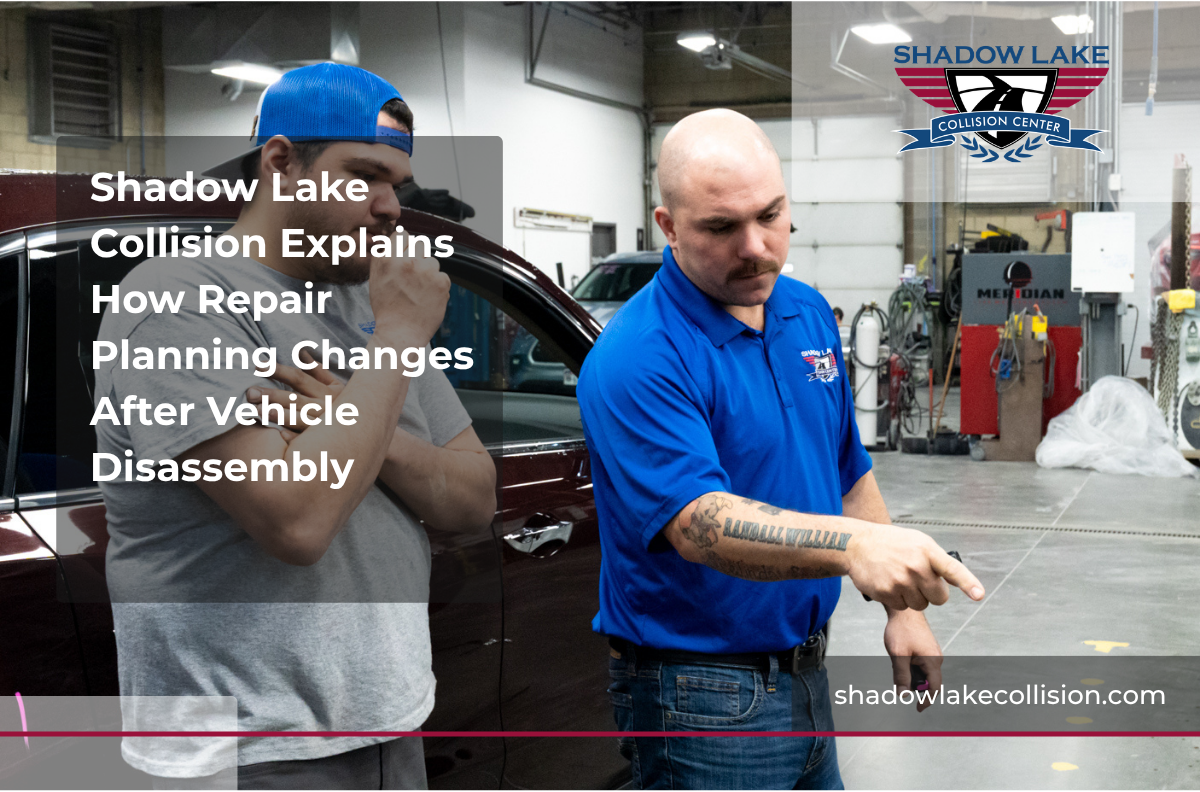
Shadow Lake Collision Explains How Repair Planning Changes After Vehicle Disassembly
Papillion, NE - November 18, 2026 - PRESSADVANTAGE - Shadow Lake Collision is publishing consumer guidance explaining

Press Release Disclaimer: This is a press release distributed through the XPR Media network. It has not been independently verified by our newsroom.

Papillion, NE – November 18, 2026 – PRESSADVANTAGE –
Shadow Lake Collision is publishing consumer guidance explaining why a collision repair plan can change after a vehicle is disassembled. The November guidance focuses on a common point in the repair process: gaining access to areas that could not be fully evaluated while exterior components remained installed.
An initial collision inspection provides technicians with information about visible damage, but bumpers, trim, lamps, liners, body panels, and other components can limit access to adjoining areas. Shadow Lake Collision’s collision repair services include evaluating the vehicle and developing a repair plan based on the damage identified during the process.
Disassembly can provide a more complete view of the affected area. Depending on where the vehicle was hit, technicians may gain access to mounting points, brackets, reinforcement areas, adjacent panels, and other components that were partially or completely concealed during the initial inspection.
The November guidance organizes this stage around three practical changes that can occur after disassembly: additional damage may become visible, the required repair operations may become clearer, and parts needs may change.
Additional damage is not automatically assumed simply because components are removed. Instead, technicians evaluate the newly accessible areas and document relevant findings.
For example, exterior bumper damage may be apparent before disassembly while brackets or mounting components behind the bumper remain difficult to evaluate. Similarly, damage around a lamp, fender, or other body panel can involve adjoining components that become easier to inspect after parts are removed.
Through auto body repair, the repair plan can be updated to reflect the vehicle’s actual condition rather than relying only on what was visible during the first inspection.
These findings can also affect parts planning. A component that initially appeared reusable may require a different decision after its mounting area becomes accessible, while newly identified damage can create additional parts requirements. Conversely, disassembly may confirm that an adjoining component does not require repair or replacement.
Disassembly can also help technicians identify whether additional measurements or diagnostic evaluations are appropriate. When damage extends toward structural attachment points or areas containing electronic components, the newly exposed condition may influence which inspections are needed before repairs proceed. These decisions depend on the vehicle’s construction and the location of the impact.
The sequence of repair operations may also change as new information becomes available. Certain components may need to be repaired or replaced before adjoining parts can be installed, aligned, or inspected. Accounting for these dependencies during planning can help reduce unnecessary rework and clarify the remaining repair steps.
When the repair involves an insurance claim, changes identified after disassembly may also need to be documented for the insurer. An updated estimate, commonly referred to as a supplement, can record newly identified damage and corresponding repair operations.
A supplement does not necessarily mean the original estimate was prepared incorrectly. The initial estimate reflects information available at that stage, while disassembly can provide access to conditions that could not previously be evaluated completely.
Vehicle-specific repair information can become particularly relevant once the affected area is exposed. Component removal, panel repairs, replacement procedures, and reassembly requirements can differ among vehicles. Shadow Lake Collision provides additional information about manufacturer-specific repair considerations through its OEM certifications resource.
The November guidance is intended to help Papillion drivers understand why an estimate prepared before repairs begin may not always remain unchanged. The purpose of disassembly is not to automatically expand the repair but to provide access needed to evaluate the collision-damaged area more completely.
For vehicle owners, the practical takeaway is that the repair plan can develop as technicians gain better access to the vehicle. Newly documented damage, confirmed repair operations, and updated parts requirements can then be incorporated into the plan before the affected areas are reassembled.
Shadow Lake Collision provides auto body and collision repair services at 1215 Applewood Dr, Papillion, NE 68046.
###
For more information about Shadow Lake Collision – Papillion, contact the company here:
Shadow Lake Collision – Papillion
Eric Dawson
(402) 763-5200
info@shadowlakecollision.com
1215 Applewood Dr, Papillion, NE 68046